Tag: the first 10 days

  • Day 6: Scenes from America’s next great city

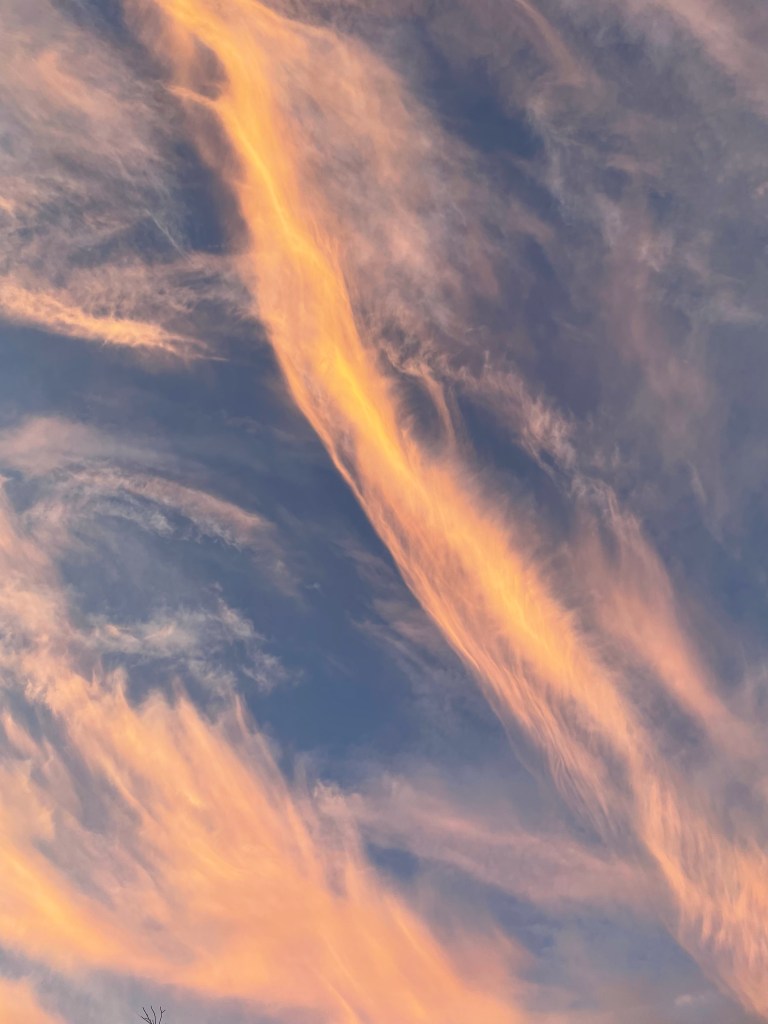
    The sky is impartial to each place it glides over.

    For much of my life, a sign has been posted near the offramp of 66 onto Virginia 123 claiming Tysons as “America’s next great city!” Virginia 123 is also known as Dolley Madison Boulevard, which I’d always heard was to commemorate her brave flight from the burning White House in 1814 with the presidential paintings in tow. (Although as I actually just learned in a quick Wikipedia dive, it was in fact Paul Jennings, Dolley’s “personal slave”, who took the famous painting of George Washington down and prepared it to be sent to New York. And Dolley’s flight was slightly less harried than I’d always imagined it; she spent the first night in Georgetown before crossing the river. On the whole, not exactly the gutsy girl-power story it was always made out to be!) Nowadays it’s the main road connecting the CIA, downtown McLean, and Tysons.

    Which brings me back to that sign, which in middle school struck me and my friends as a terrific joke. Every part of it felt bewildering. “Great”? “City”? To us, Tysons was where the mall was. More specifically, it was where every possible iteration of mall was: mega, strip, and upscale. There was the regular mall (Tysons Corner), the fancier mall (Tysons Galleria), the movie theater, the Silver Diner, the Borders, the TJ Maxx, the T-Mobile store, and the bagel place, to name a few. It was a place of pure commerce and bored suburban teenage drama. I spent many an afternoon circling what was then the newly built and thus very exciting part of the mall after watching my best friend try on tube tops that my own breasts could never hope to fill at the Wet Seal. Such, such were the joys.
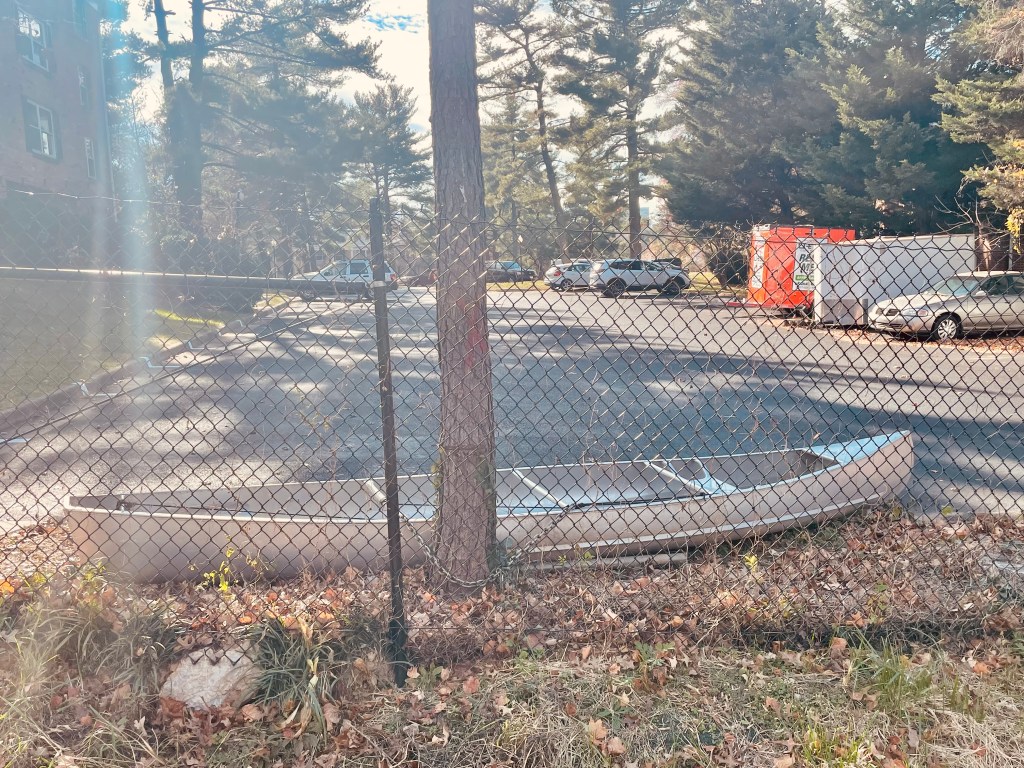
    Like so many of us, going nowhere.

    But it never occurred to me that people might actually live there, or want to move there. Even then the area was sliced through with highways. It seemed to offer none of the aspirational comforts of the suburbs – no lawns, no schools, no big houses – while also promising none of the perks of urban life, given that it was mostly unwalkable and lacking community.

    Now, I find myself back in this area, staying with my father and his wife while I get a job and figure out where I want to live next. He moved back because he was continuing to work out of Washington and, I think, had a fond association or at least a familiarity with McLean from the time we spent here as a family. He lives on the edge of McLean, so close to Tysons that, among closest friends and with nothing to prove, you might even say he lives in America’s next great city.

    This part of Northern Virginia is a strange place, my friends. It is a place with a gated community called “The Colonies”, without a whisper of irony or historical embarrassment. It is a land of basements, and basement culture. Up until middle school, I’d mostly lived between deserts. When we moved to McLean in between diplomatic postings, I had my first brush with everything a basement could be. Basements in NoVA were carpeted “dens”, with pool tables and leather sofas and DDR mats. They were places to watch movies and listen to band rehearsals and feel around for the sweaty hand of your crush in the dark. My first kiss was in a Virginia basement, and it was about as specific and memorable as its beige surroundings.

    This is a place of regular, compulsive, near-fanatical leaf collection. Sacks upon sacks of leaves in brown paper bags waiting for pick up on every street, in bags from Costco and Lowes and Home Depot, some of them with cheeky phrases like: “I’m stuffed!” It is a place where not picking up one’s leaves is instantly noticeable, and the forgotten leaves drift in crunchy hillocks and carpet the yards of the more conscientious.
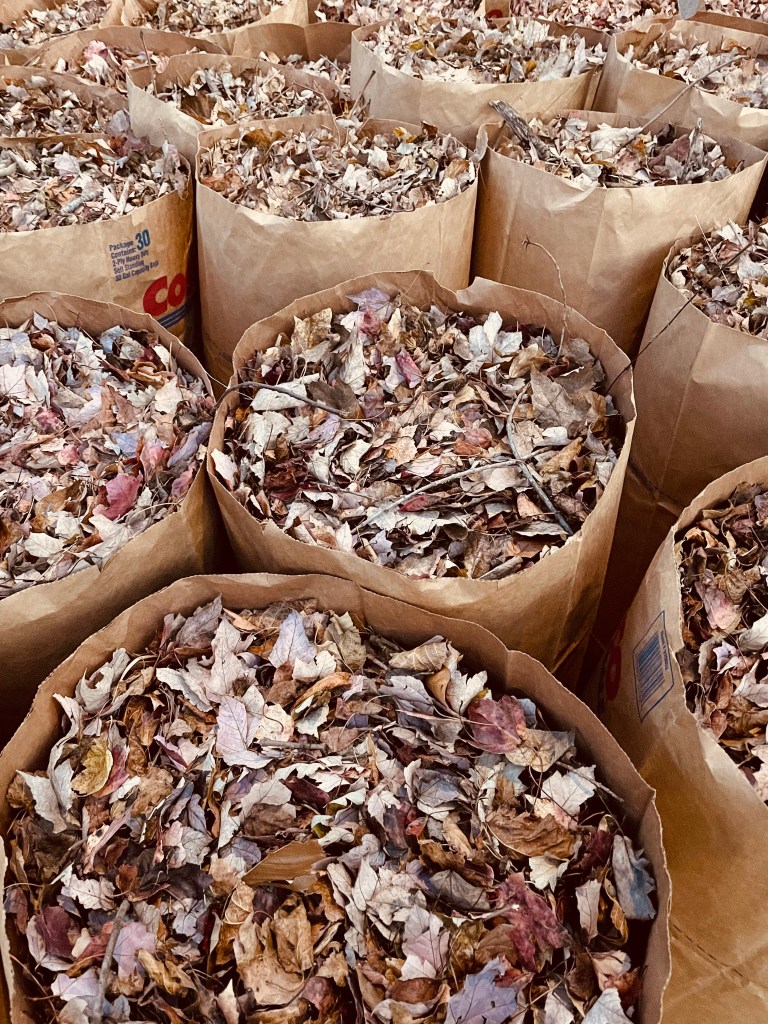
    Life in the kingdom of leaves.

    It’s a place of juxtapositions and jarring disconnects. Pimmit Hills, a neighborhood here, is full of the houses of an older Virginia, small pre-fabs and craft houses placed on large plots of land with enormous trees. But the neighborhood hums with constant construction as old houses are torn down and replaced with mini-mansions, all rendered in identical aluminum siding and bursting at the edges of their allotments. In Tysons, it’s technically possible to walk from one building to the next, but to do so is functionally to island hop from one corporate campus to another. Each cluster is designed to be self contained, a glassy apartment complex set on top of a Whole Foods or a Wegmans with a few restaurants and a modern-sounding name, like The Boro. Capital One owns much of the area near the metro station and has brought a new music hall. All of this is a complete transformation from my time as a young adult. The hope I suppose is that young people and young families might move to Tysons anticipating they’ll be close to DC, but then discover they have everything they need right there.

    But this is also a place of unnerving and unpredictable borders. Black Lives Matter signs living next door to Parents for Youngkin. At least one confederate flag, not too long ago. Christmas displays and nativity scenes so extensive, so over the top, they seem to be daring for comment. It’s worth noting that Northern Virginia is a diverse place, one many different immigrant communities call home. It’s full of people who currently work or used to work in Government and International Development. People who live here or are from here tend to add the Northern for a reason – it’s not quite Virginia. And yet, it is. The mood in some neighborhoods can be one of suspicion. Even without fences, the properties can feel like small islands unto themselves.
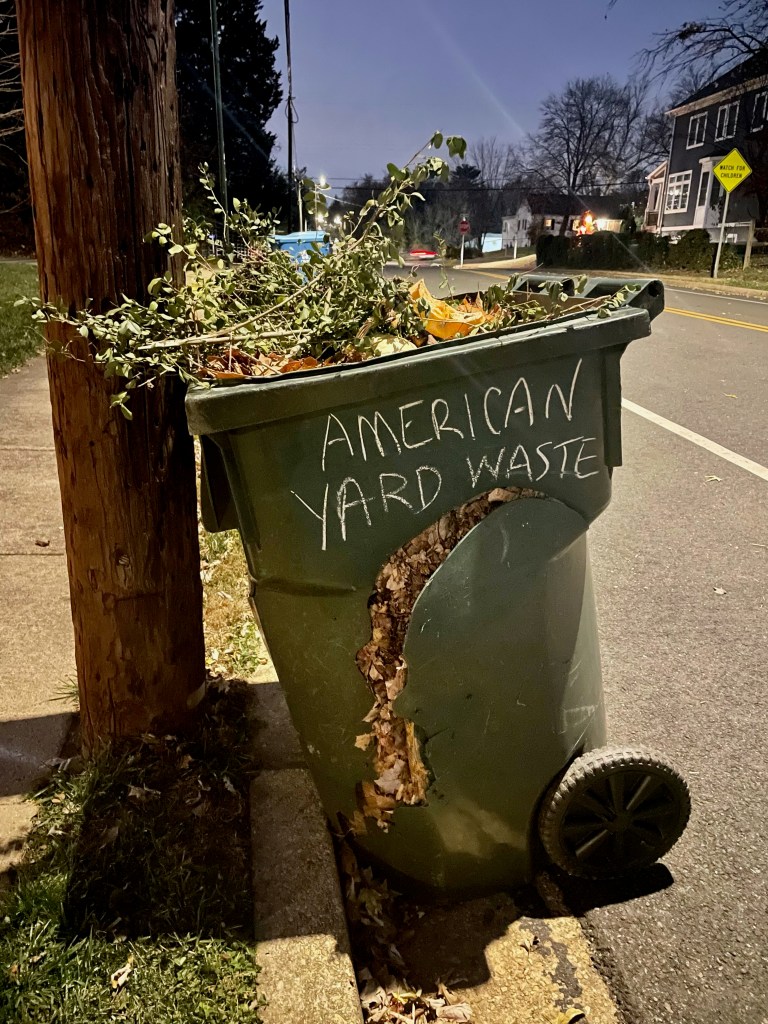
    Despite the look, this is not political commentary.

    What makes a city? And what makes it great? Coming here after Paris, I felt disturbed. There, as with many great cities, I’d step outside and see immediate signs of life. A walk was richly textured: there were people eating, chatting, and buying groceries. You could look in through the store windows and catch glimpses of other lives. There were parks and libraries but more meaningfully there were neighborhoods, ones you had to walk through to get anywhere. In a city, getting somewhere can still be a means of encounter.

    And what makes a suburb? I’ve noticed that people who come to the Southwestern United States tend to either love or despise the vastness. For some, it’s profoundly lonely, being able to see so much and feel how small you are on the face of it. But looking out from my window here at the street leading up to Corporate Ridge, a place that glowed orange even at 4 in the morning on the night of the lunar eclipse not too long ago, I feel I would give anything for the honest vastness of the desert. Here, everything is close, and yet one is so often alone. The surburbs promise space at the expense of proximity to other people. They say, you can have a place of your own. A thousand lawns and a long road to anywhere else.

    I don’t mean to be so harsh. I tried one evening here to put aside my cynicism and imagine the place with fondness. I could picture the feeling of coming home to my place, a place where I could stand outside and see everything of mine at once. I imagined coming home from work to a place that was decidedly not work, and looking into the kitchen from the driveway. I see the families out biking and see the lawn decorations and know this is home for somebody. For many. And it will only continue to change. Still, will it one day be a city? And will that city be great?

    1338 words and I have got to call it quits, these are just killing me! Day 6/10 and yes I skipped yesterday.

    Also if you want to read more about the Tysons project, there’s this article from 2011. There’s lots of stuff now too but I like to see the vision of it from an earlier time.
  • Day 5: Considering late 90s internet romance

    I recently rewatched The Holiday, the 2006 Nancy Meyers rom com about two women who swap “houses, cars, everything” for two weeks over the Christmas holiday. I’ll save my thoughts on it for another day, but the main thing that struck me watching it was the innocence of a time when the internet was seen as a place where magic could happen; a place where two women nursing their respective heartbreaks could log on and find each other.

    This past summer I rewatched You’ve Got Mail and was similarly blown away by the sort of charmingly naive premise of it. The two leads, we learn, met chastely in an over-30s chatroom and decided to continue the conversation through email and, eventually and with palpable sexual frisson, over instant messenger. The anonymity of their correspondence allows them to shed their attachments to their daily lives. They don’t have to pretend to find their jobs noble or interesting, or to enjoy their partners. Everything real that holds them in place becomes immaterial. They are only who they say they are.

    The trope of lovers who can’t see each other is infinitely repeatable and rich with narrative potential. Consider Pyramus and Thisbe and their crack in the wall. For the lovers in the story, the absence of their bodies allows for an expansive erotic imagining of the other and raises the stakes of their connection: will it translate in person? For the audience meanwhile the story becomes an elaborate in-joke, layering tension over even innocuous scenes. We become students of their chemistry, looking for evidence that the characters might already be choosing each other long before the reveal.

    You’ve Got Mail is of course based on another movie, The Shop Around the Corner, from 1951 (which I also recently watched) which itself was based on a Hungarian play. The latter revolves around two coworkers who have been writing letters to each other without realizing it – none of this is new to the internet. If you could strip away the physical constraints of your life, the argument of the unseen lovers seems to go, like your job, your location, and your appearance, you could get to the core of what matters. Underneath all those details of daily life, there is a real you. Someone more vulnerable, more honest, more you than you are in your everyday. The early internet movies believed in a kind of liberation through text, finding love through good dialogue.

    But! But. Mysteriously, the internet of the late 90s/early 2000s (much like the letter exchange of the 1950s) always seems to pair you with a person… exactly like you. This is what got me. It’s odd that the person Meg Ryan met in a chat room would be Tom Hanks. Obviously it’s the prerogative of Hollywood to make everyone good looking, so that’s not my issue. But what are the odds that the person you meet on the internet, supposedly free from the constraints of your physical existence, would be… a white man also living in not only the US but in your exact city, from a comparable class background? (Same deal with the Holiday, although given the role real estate plays in the set-up, it’s perhaps more understandable.) What are we to make of this version of the internet? In its own way, it was maybe prescient, predicting the self-selecting approach of the filter bubble or the facebook group. When faced with the chance to meet anyone, we still might just choose the people who are exactly like us.

    (I’m still thinking about it – it feels like there’s more here. Maybe the idea that internet anonymity itself would separate us from our real-world identities is its own kind of colorblindness. And maybe some of the joy is finding your people too. It just felt funny to look at the older version of the internet depicted in these movies and see how very local it is.)

    655 words, Day 5/10 – halfway through!!

  • Day 4: Circadian confusion in the climate change years

    Denizens of the met-tree-polis. (Sorry!)

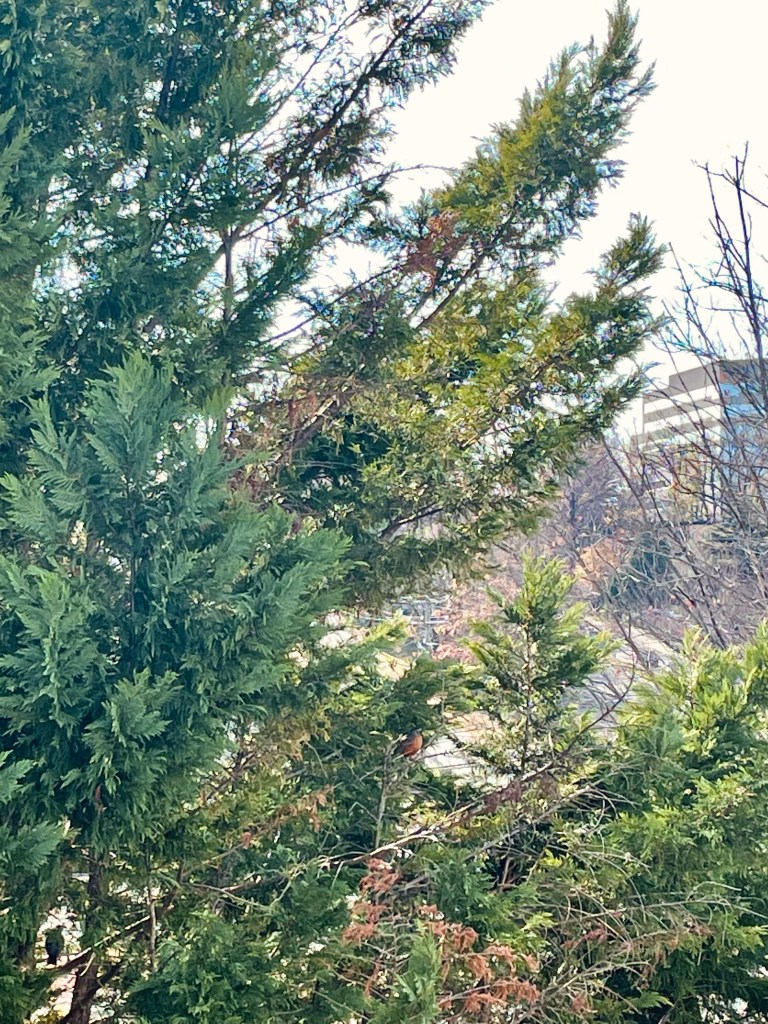
    Today I woke up to a frenzy of bird activity just outside my window. I’m currently staying in the upstairs bedroom of my father’s house, which looks out over a privacy row of evergreens planted between suburban residential lots. I woke up late today, around 9:30 or so, which would usually mean no good bird watching, but the main tree was frankly shaking with energy, so much so that the birds would ricochet off the tree and scatter to the drainage pipes nearby or onto the wooden railing skirting the roof.

    It’s warmer than it probably should be this time of year, climbing into the high 50s today, and sunny. We’ve had a strange pattern of shifting cold and warm fronts lately: days of bone-aching chill followed by balmy days of t-shirt weather. In this past week they’ve almost formed a daily seesaw. It creates a kind of seasonal vertigo.

    There were many birds in the tree today – finches, sparrows, chickadees, cardinals, even a blue jay skirting the edges. It was a pretty cosmopolitan affair, birds in different plumage on adjacent branches, unbothered by one another. The tree felt like a little bird city, full of action. But the notable majority were robins. Robins, everywhere, looking a little pompous as robins do. Weird, I thought. I usually think of them as a spring bird. It turns out I’m wrong, and they are year-round foragers, though they tend to spend the winter time roosting rather than poking around in yards.

    Still, poor robins, I thought, it must be so confusing to have a body so responsive to the weather, stopping and starting. It must be exhausting to think you’re settling in for the cold and then wake up to spring-like sunshine and feel an inexplicable urgency to go forage and mate.

    And then I realized I was projecting, because I’ve actually been noticing that feeling in myself a lot these days. A kind of constant spiritual misalignment with the weather. I should say I’m generally ambivalent about fall, which I sometimes enjoy but mostly find to be melancholy and depressing. I loved it as a kid, when it meant new pencils, new notebooks, and old friends, but in college I started to associate it with stress and heartbreak. All of my worst breakups have taken place during the fall, which could just be chance, or could be because in fall I tend to get stiff and crabby with cold, and small-hearted as a result. I spend the whole season trying to avoid a deep chill for as long as possible, knowing I won’t fully thaw again until late spring. There are two blissful weeks when the leaves are colorful and the crisp air is invigorating, and then things just go grey.

    All of which would seem to suggest I’d be relieved to have a sort of warm fall. But my grudges aside, the one thing I do like is the way fall slows things down. I like the shifting angle of the light and shorter days. As much as I love summer, it can be frenetic and overstuffed – fall thins out the days a bit. The cold air sharpens my thoughts and places me inside at my desk. I quite literally let myself dream more in the fall, when I sleep more and slow down earlier.

    This fall has been energetically baffling. I had the fullest possible summer, maybe one of the best summers of my life, traveling to Italy and France, eating and walking a lot, visiting my dear friend and her new baby and husband in their house in the mountains. I was ready for rest. But the warm weather has made me feel restless and ambitious, wanting to put on a dress and meet people. It gives me the feeling that I should be doing something much more than I am doing. Rather than slowing down, letting my thoughts turn over become mulch, I can spend days feeling a displaced sense of urgency. And, at least in Northern Virginia, the mood among my neighbors seems to be similar, with the endless rattle of construction, yard work and restless agitation.

    There was a good essay earlier this year that I’m trying to find but can’t about how the aesthetics of fall no longer actually align with the season. October saw the usual shift into autumn marketing – i.e. plaid flannel, pumpkin spice, squash recipes, “coziness” – before the weather had even gotten cold enough to put on layers. The squash were not yet at the farmers’ market. What is a season beyond the idea of it? And are we ready for the seasons we know to become so unfamiliar?

    The modern philosopher Wendell Berry has noted the shift from agricultural and natural metaphors to mechanical ones in the way we talk about our own bodies and lives (thinking of ourselves as “machines”, for example, with inputs and outputs). Even more recently, we’ve moved to technological ones – talking about our “bandwidth.” Maybe it’s only fitting that our lives would become more and more untethered from the regulatory timing of the natural world, just as that world is becoming more unpredictable. A computer doesn’t have seasons, after all.

    (I want to be clear, I’m not just talking about the four seasons experienced in New England and the Mid Atlantic. Every place has its seasons and so I suspect every place has its unique psychology of them, even if those seasons are more about a shift from wet to dry, or windy to still. The earth is a shifting place – no place is static.)

    I suppose the thing I’m trying to say in so many words is, what do we do with fall that doesn’t feel like fall? I feel a spiritual loss at that. It’s already so hard to slow down when the world gives us the right cues to do so. What about when nature seems to insist on activity – when it’s November, and the robins are restless?

    1001 words, Day 4/10

  • Day 3.5: An interlude, a digression, and an explanation.

    I skipped yesterday because I had a little meltdown. I want to be honest – I hate that I’m doing this.

    ^ That was yesterday, actually. I wrote those two sentences and skipped another day. No meltdown this time, just a deep weariness looking at the screen. Instead of finishing the thought I watched three episodes of the Crown, a show I don’t even particularly care about, which is to say nothing about the Crown, just a general feeling about most tv these days where I wonder: is this my life? Watching television, and getting better at it? Practicing every night so I can… watch it even better the next time? I digress.

    The truth is, I don’t know why I’m blogging. A friend called the day before yesterday to talk to me about an earlier post and I nearly lost my mind with panic at the thought that someone had actually read any of it. I broke down into hysterical sobs at the idea that someone had seen my thoughts before I could know what they’re about, before I know what my voice is or what I want to write about or who I even am in this format. And so I had a big cry on the phone and he patiently listened and then told me, “well… why don’t you write about that?”

    So before I go any further with this project, a project I never really articulated the rules of because I tend to be a little too precious about rules and prioritize figuring them out and perfecting them, often to the detriment of action, I want to think through a little of what I’m doing here. I mean what the hell I am actually, really doing here. (?) (!)

    First I’ll say whenever I have thought about starting a blog or a newsletter or some other sort of low-friction routine online writing, a series of internal arguments begin, usually hinging on these quotes:

    First, Rebecca Solnit, in her tips on writing: “Write what you most passionately want to write, not blogs, posts, tweets or all the disposable bubblewrap in which modern life is cushioned.” A kind of noble, anti-crap stance.

    But then, Ira Glass, on how to move through the “taste gap” in the early stages of making creative work: “the most important possible thing you can do is do a lot of work — do a huge volume of work. Put yourself on a deadline so that every week, or every month, you know you’re going to finish one story. Because it’s only by actually going through a volume of work that you are actually going to catch up and close that gap. And the work you’re making will be as good as your ambitions. It takes a while, it’s gonna take you a while — it’s normal to take a while. And you just have to fight your way through that, okay?”

    And then there was Jiayang Fan on the Longform podcast not too long ago saying “the world deserves to know the quality of your uncertainty” and “write into your self doubt.” Which was advice perhaps not intend for me, a person who the world has given much more than it has taken away, but still hit deep in my chest.

    And more personally, my friend Sheycha (who is in fact a working artist, her link to come when I get an updated one) telling me that much of art and breaking through creative blocks is about “imperfect action.”

    Not to mention, I used to be paid at least in part to tell fledgling podcasters that they couldn’t wait until they have the perfect idea; they just had to start making things and mess around and iterate. That they wouldn’t know what their podcasts were really about until they started making them. Sometimes, you just have to start.

    I’d long fallen on the Only Make Good Art side of the argument, certain that any sort of casual online writing would steal my focus from the longer term writing projects and questions, the things that mattered most to me. But then this year, way back in the late summer, when I was in Paris and feeling especially observant and curious and maybe even a little witty, I thought it might be nice to start something structured, in the vein of Suleika Jaouad’s advice to dedicate 100 days to a project. Something with clear rules to help rein in the part of me that is so uncertain, so wishy-washy, so unlikely to let go of something until I’ve perfected it. It was meant to be an antidote to my dozens of journals full of early drafts that never saw readers. For years now I have been trying to commit myself to an ideology of act first, think later. Not because I don’t value thinking, but because I prefer to think about something for years, maybe literal decades before I affix myself to a viewpoint. I wrote a cheeky little post called “The Rules” that held myself to 250 words every day but Sunday, because the French like to keep their Sundays sacred and I thought I might too. It felt so breezy, so fun – 250 words! I was going to museums practically every day, eating good food, reading great books. Surely I could pull 250 words out of nowhere every day. I wrote the first day, told someone about it, and then promptly stopped writing.

    This has been a life pattern. The minute I tell someone what I’m working on, it drifts off into nothingness. For a while I thought it was because speaking something out loud would diminish the necessary creative tension to get things out, and I do still think that’s true to a point. Sometimes an idea needs to sit, itchy and restless inside of me until I can coax it out. But I think my fear of sharing was much more about keeping myself blissfully unaccountable to anyone. It’s such a boring story. It’s exactly what they say about any creative work. But it’s still true, and it still aches in its way. Someone might want to read my short story? Well then, it will fossilize as a draft, something for me to reference to uninvested strangers as evidence that I actually do write in my spare time.

    Inspired by another friend who started a newsletter, I decided to start up again impulsively, this time with a 10! Day! Blazingly-Paced! content generation scheme, where I would post and post and post until I had sandblasted through my own insecurities and learned something about writing in public. “Public” being practically no one because I didn’t tell anyone about the plan. It was a nice secret plan that promptly imploded when someone found out about it, but was already feeling doomed because of the knots even just three silly posts had threaded deep in my gut.

    So, candidly, here are my fears about writing this way, or maybe about writing, period: I’m afraid that I don’t know what I think. I’m afraid that I don’t have a voice or a perspective. I’m afraid that what I write might hurt someone inadvertently, or sound foolish, or reveal a kind of lazy thinking, or for that matter reveal any number of unflattering personality traits not limited to: my narcissism, my desire to dazzle, my need to be liked, my tendency toward meaningless artifice and flourish, my general fondness for 10-cent words, my arrogance, my generalist’s habit of playing fast and loose with facts… the list goes on.

    I’m afraid I won’t have permission to grow in public, from the people I share this with or even from myself. That I’ll sound too much like the writing I hate and not enough like the writing I like. That I’ll fart around writing the things that don’t really matter to me or to anyone. I feel this even more acutely because it is so possible in this exact moment to have a transactional relationship with every thought and turn it into a tweet, a post, an essay, a video, etc. etc. etc. I think of that Rebecca Solnit quote again and I just want to cringe – am I just adding bubblewrap? There is so much writing now. There is so much good writing, and there is also so much filler, and sometimes it can feel like the goal of even the most thrilling creative enterprises today is to get us all to spend as much of our time as possible reading/watching/listening to/thinking about other people. To be hooked in to other things vying for our attention instead of sitting deeply in our own lives. If I’m going to contribute to the tsunami of Content or even just the growing pool of thoughts, I want to do so with something meaningful. Though actually, the first word I wanted to write was “neat.” So, meaningful and maybe also neat. ¯\_(ツ)_/¯

    In some ways I know this post is itself a sort of screaming disclaimer, anticipating criticism and saying “see! anything you’ve thought about me, I’ve already thought about myself!” But more than that, I wanted to free myself to write this all out, as a kind of mission statement or manifesto, to set some parameters and release the demons. In fact, while I’m at it, here are some rules for myself:

    I choose learning over achievement. This is a learning process. I am hoping that by writing a lot, and about many different things, I will learn what I like to write about in public – where I feel resistance, where things flow, what feels fun and what feels like a chore.

    I reserve the right to revise. I’ll acknowledge where I do so, but I don’t want to be so wedded to my own ideas that I am unwilling to scrutinize them or change them in future.

    I also reserve the right to experiment. With genre, topic, form, length, cadence, etc.

    I get to write through and past my embarrassment. I want my words to do justice to my thoughts and the thoughts of people I am responding to. I accept that inevitably I am going to write something I look back on with true, palm-sweating horror. This is usually where I’ve stopped in past. Every newsletter I have ever written has arrived at some horrifying, self-indulgent, overwrought essay where I tried to do too much. I accept now that will happen and I just have to keep going, and maybe I don’t have to wear it as some miserable badge of dishonor saying “I can’t actually write.”

    Oh, and: I will post by 9pm. Ideally even earlier. No late night spirals hunched over my laptop, burning in the blue glare and hating myself. For my own wellbeing, what I post here is not going to get in the way of my pajama time.

    So, for the next 7 days, I will be posting every day and seeing what happens. When the ten days are over, I’ll reflect how it went and decide if I want to try to keep going for 30 (whoahohoHO! Is the world ready?!) or switch to an essay-once-a-week kind of deal.

    Thank you for reading this, if you did. It’s the usual writers-agonizing-about-writing kind of thing that I hate to contribute to the total word count of, but I needed to say it and just exhale. And with that said, here we go.

    1903 words (hilarious), Day 3.5/10

  • Day 2: Turkey necks and other wonders

    Day 2 of my challenge and it’s technically already day 3. So, off to a swell start!

    My favorite part of Thanksgiving each year actually comes at breakfast, when my father fries up the turkey liver and heart in a mix of spices with bacon, shallots, sherry, and (sometimes) raisins. We serve it all with toast and a crisp glass of wine. It’s a perfect meal for many reasons: deeply savory, nutritionally rich, not too heavy, and eaten long before our palates have been spoiled for dinner, before we’ve grown sick of the scent of turkey in the kitchen. It’s also a moment of whole-animal eating, which doesn’t exactly justify the turkey’s death but does honor its sacrifice a little. We savor each part of the bird.

    (I’ll confess that I like to eat meat, which is somewhat unfashionable and morally fraught. I’m trying to eat less of it. I wish I liked it less – I know friends who love the taste but hate the way it makes them feel, but I’ve always felt fortified by it, at the cellular level. I try to eat it sparingly, but I do love it. Of course, it has its costs. The other day, I had a carnitas burrito at a place I used to like in DC that hasn’t aged well. I ordered the meat on autopilot and as I ate it – flat, old, over-peppered to disguise its old flatness – I felt deep regret for the animal. I felt sad for the pig who gave its life for my mediocre burrito; for my own frivolous violence. So, as I said: morally fraught.)

    In any case, this year, my father couldn’t find the heart, which was fine because for all my love of the ritual, I’ve never actually liked eating it. Where the liver has a pleasant taste and texture, like sweet and smooth like clay, the heart is tough and chewy. We ate just the liver and had no complaints. But later, as I picked at the remaining giblets for stock, I spied a valve.

    “Is this the heart?” I asked my father, holding up an organ almost the size of my fist. The organ was in pieces, clear divisions between the tissue. “Too large,” he said. “I think that’s the gizzard.” But he agreed the valve was curious. We looked at it together for some minutes before he had an idea. He touched the walnut sized top piece where the valve was visible and gently pulled it loose. There the heart was, tiny and elegant in his fingers. I took all the pieces back to the stock pot, cradling the heart in my palm, and dropped them in.

    When the stock had been boiling for 30 minutes, I fished out the neck to cut off the meat. It was tender, though still attached tightly to the bones in some places. I started with a fork but found it much easier to work with my fingers, smoothing them along the vertebrae. The neck bones were cinched together like a rosary, the knobs interlocking. If I held them in a straight line, I could look through the central tunnel where the nerves once sat.

    Is it weird that holding an animal’s bones gave me such a feeling of reverence? Taking the bones of the bird we’d eaten in my hands, I felt an enormous gratitude for its body, which fit together so perfectly – and in turn for my own body, with its own gently nestled and exquisitely arranged bones. I saw the wonder of the turkey’s small heart and thought of my own heart no bigger than a fist. Eating meat is violent, but it is also strangely intimate. It can mean holding another body in your own hands and glimpsing all the things it kept hidden in life. Anatomical secrets. Feats of biological engineering. I felt a real sense of awe, that we – the turkey and I alike – walked around like marionettes, stacks of bones moved by pulleys and strings and kept alive by tiny hidden hearts. Pretty cool.

    And on that note…

    Leftover Turkey & Wild Rice Soup

    *A recip-ish, ispired by the flavors of tortilla soup

    First, make a turkey stock, which takes 4-6 hours. Add in the leftover turkey carcass, stripped of meat, and any bones, especially wing bits. Add a whole onion, two smashed garlic cloves, carrot, celery, and some salt, depending on how you seasoned your turkey. Also, a bay leaf. Cover with water and gently simmer.

    When it comes time to make the soup, sauté diced onion, carrot, and a jalapeño in a few glugs of olive oil until the onions are starting to soften and go translucent. Add about 4 cloves of garlic, minced, and stir so they release their fragrance, for less than a minute. Toss in a half teaspoon of cumin and coat the vegetables. A pinch of salt.

    Ladle in stock, six cups or so. Add one or two diced tomatoes, 1/4 cup of tomato paste, and one or two (or more) chopped chipotle chiles from a can with adobo sauce, as well as some spoonfuls of the sauce. Add a small fistful of cilantro, coarsely chopped, and another spoonful of cumin. Taste, and adjust seasonings, including salt. I had wild rice and turkey meat left over from Thanksgiving, so I added them in here, but if you don’t, you could add the meat in to boil. When ready to serve, turn off the heat and add lime juice and zest to taste.

    I recommend serving it with lime wedges, sliced jalapeños, cilantro, and fritos/tortilla strips. I also thinly sliced cabbage, which I like to toss with a sauce: a few spoonfuls of sour cream, spoonfuls of adobo sauce from the chipotle can (to taste), salt, and the juice of a lime or two. Toss just before serving, as the cabbage will go limp if it sits.

    979 words (! I need to cut these down…), Day 2/10

  • Day 1: Interpretation traps

    La condition humaine

    La Condition Humaine, Rene Magritte, 1933

    Dear friend,

    The other day I was at the National Gallery of Art and I saw this painting for the first time – or perhaps it was just the first time I paid attention to it. It’s apparently one of four that Magritte made with the same title, all showing similar themes of a canvas in front of nature. Admittedly I didn’t really care for the look of it (there were plenty of other paintings that I liked better) but it stood out to me because it felt so instantly, undeniably, impossibly about instagram, or social media, or any of the other ways we try to photograph and document our lives.

    It’s probably too easy and simple to say “there’s nothing new under the sun” even if it is true, but something about the whole combination of elements felt prescient: the beautiful view of nature, the perfect replica of it on the canvas, the canvas blocking the view so that it becomes the new object of adoration in lieu of the actual scene. Seeing it, I thought of a night just a few days prior when I’d climbed a hill in the neighborhood across the street and seen a sunset so spectacular it made my heart ache. I wanted to soak the purity of the orange and pink and twilight purple straight into my bones. But I also felt the itch to photograph it. My fingers actually twitched a little, already rehearsing the familiar motions of unlocking my phone screen. Even knowing a camera couldn’t capture the density of the beauty, I wanted to do what I could to keep the sky with me. I resisted ultimately because I didn’t want to slide a phone between me and the horizon, but it was hard to accept the idea that there was nothing more to do with beauty than to let it pass in front of me, while I witnessed it.

    It feels so deeply human to me to block one’s own window with an attempt to replicate what’s outside it. To want to hold on to the precise beauty of the moment – the shape of the clouds, the light on the leaves, the way it makes you feel to see it. To want to make a piece of nature’s beauty that you get to keep forever. Instagram made it easy, but perhaps we have always tried to hold on to what we find beautiful, and in the process, stop seeing it. La condition humaine.

    So, a very tidy analysis. Though as it turns out, of course, the painting is actually more about what’s real and what’s false, and how we let our interpretation of that get in the way of really seeing. Or at least, that’s the sense that I get. Magritte wrote a somewhat inscrutable letter about it that I could only partially follow. We’re led to assume the painter of the in-picture canvas has captured a perfect likeness of the world outside the window – the lone tree, the dark hedges, the dirt path, the grass – because the landscape blends so seamlessly at the edges. But because we can’t see what’s behind, we actually can’t know what the painter sees, and if the canvas is telling truth or fiction. The painter has interpreted the scene out the window, and we in turn are interpreting his interpretation, which is of course mediated by Magritte, who put the thing on canvas.

    Magritte knows our minds want to build a story about the painting based on what details he’s given us; we want to say what is real and what is false. But the joke is hidden in plain sight – after all, it’s a painting of a painting. All of it is false, all fabrication, and none of it is somehow more or less fake than the rest of it. As the National Gallery of Art suggests, perhaps this is actually the human condition he was alluding to in the title: the endless desire to analyze, to the detriment of witnessing things as they are.

    And so of course, Magritte has the last laugh. I saw the painting and thought it was an eerily prescient social commentary. Yet in thinking about what the painting means – about what’s real or false, what’s really going on, “what it’s all about” – I let interpretation get the best of me. As it turns out, I didn’t really see the painting. It was just a painting. All fabrication. But very true.

    749 words, Day 1/10